Chinese Martial Arts & Weapons in Phantom Blade Zero
Explore Chinese martial arts traditions, wuxia concepts, and the swords, blades, polearms, flexible weapons and Phantom Edges shown in Phantom Blade Zero.
FAQ
Which martial art is Phantom Blade Zero based on?
Does the game officially feature Wing Chun?
How many weapons are in Phantom Blade Zero?
What does “Chinese martial arts” mean here?
Chinese martial arts are not a single style. The umbrella includes armed and unarmed traditions, military methods, family and regional systems, performance practices, and modern combat sports. The International Wushu Federation describes wushu as a collective term for martial practices that originated and developed in China; kung fu is the familiar international label often used for traditional wushu.
Phantom Blade Zero draws from that large physical culture, then combines it with machinery, fantasy, and folk horror to form what S-GAME calls Kungfupunk. The result should be read as a stylized action game informed by Chinese martial arts—not as a digital manual for one lineage.
The studio uses martial artists and experienced action choreographers for motion capture. It has also emphasized that individual weapons receive their own movement language. That makes the game a useful doorway into Chinese martial culture—but not a documentary or a one-to-one simulation of any school.
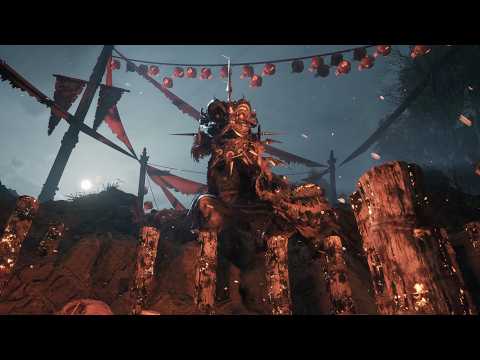
What exactly is Wuxia? Phantom Blade Zero director Soulframe explains
Wushu, kung fu, wuxia, Wulin, and jianghu
These terms overlap in conversation, but they do different work inside the game and its marketing.
| Term | Useful meaning for this game | What it does not automatically mean |
|---|---|---|
| Wushu (武术) | The broad family of Chinese martial practices, including empty-hand and weapon systems | One standardized ancient style |
| Kung fu (功夫) | Literally skill developed through sustained effort; internationally, a common shorthand for Chinese martial arts | A single school or ruleset |
| Wuxia (武侠) | A storytelling tradition centered on martial heroes, codes of conduct, rivalries, loyalty, and extraordinary skill | A claim that every technique is historically literal |
| Wulin (武林) | The social world of martial artists, schools, masters, wanderers, and conflicts | Just a physical forest or one location |
| Jianghu (江湖) | The wider unofficial world beyond ordinary institutions in which wanderers, guilds, outlaws, and martial figures meet | A confirmed faction or map name in Phantom Blade Zero |
S-GAME now describes the Wulin as the game’s dark wuxia world. The August 2026 State of Play says Soul can meet citizens in need, complete side quests that may open new story paths, and uncover hidden secrets. That gives the martial world a social dimension: it is not only a backdrop for duels, but a network of people, obligations, and competing interests.
Which inspirations are officially named?
S-GAME has explicitly highlighted three traditions or set pieces:
- Seven-Star Sword Formation — seven swordsmen alternate between coordinated group attacks and individual pressure. In the officially described second phase, surviving disciples suspend their leader on crimson threads and manipulate him as a String Puppet, changing the fight from formation pressure to an erratic airborne duel.
- Lion Dance — a folk performance tradition built from stance work, synchronized movement, rhythm, and acrobatics. Its appearance shows that the game’s references extend beyond formal combat schools.
- Drunken Sword — sword choreography using off-balance shapes, broken rhythm, and deceptive changes of direction.
These are the safest examples to call confirmed. S-GAME says the Seven Stars battle used motion capture from several martial artists under veteran action choreographers. Other connections below explain how the game’s visible weapon families relate to Chinese martial arts in general; they are cultural context, not official labels for skill trees.
How Chinese weapons organize movement
Traditional weapon practice is not simply empty-hand movement with an object added. Length, balance, edge alignment, grip, and recovery all change how a practitioner controls distance. Those same ideas help explain why Phantom Blade Zero can support a large arsenal without making every weapon feel like a cosmetic sword skin.
- Distance — a spear or staff threatens a different zone from a short blade or bare hands.
- Line — thrusting weapons emphasize direct entry, while broad cutting weapons can control wider arcs.
- Tempo — paired and flexible weapons can create continuous pressure; a heavy weapon may rely on commitment and delayed impact.
- Structure — power comes from coordinated stance, waist, step, and weapon, not only the striking arm.
- Recovery — every committed cut, thrust, sweep, or flexible-weapon cast must return to a controllable position.
- Deception — changes of rhythm, false openings, and attacks from unusual angles make a technique harder to read.
These are analytical lenses, not hidden game statistics. They explain what to watch for in animation and encounter design without inventing frame data or school names.
Martial traditions and their in-game weapon connections
| Tradition or family | Core idea | Connection visible in the game | Evidence level |
|---|---|---|---|
| Jianfa (剑法), straight-sword methods | Point control, changing lines, cuts and thrusts linked by mobile footwork | Straight swords, paired blades, and the Seven-Star Sword Formation | Sword formation officially named; specific schools unconfirmed |
| Daofa (刀法), saber and blade methods | Committed cuts, momentum, body rotation, and pressure | Curved blades, heavy blades, and broad cutting weapons shown across trailers and demos | Weapon family visible; lineage unconfirmed |
| Qiangfa and gunfa (枪法 / 棍法), spear and staff methods | Reach, direct lines, sweeping control, and leverage | Spears, staffs, and large polearms shown in official or hands-on footage | Weapon family visible; school unconfirmed |
| Ruanbing (软兵), flexible weapons | Timing, coils, changing distance, and attacks around a guard | The flexible Soft Snake Sword seen in hands-on preview builds | Weapon name reported from previews |
| Shuang bing (双兵), paired weapons | Alternating hands, angle changes, continuous pressure | Twin blades and paired circular weapons such as Seamless Death in preview builds | Weapon names reported from previews |
| Quanfa (拳法), unarmed methods | Structure, distance, hand combinations, and close-range control | Bare-hand and close-combat sequences appear in footage | Visible, but no named school confirmed |
Where do famous schools fit?
Readers often look for Shaolin, Wudang, Wing Chun, Hung Gar, Taijiquan, or Baguazhang. These names describe distinct lineages or families, not interchangeable “kung fu moves.”
- Shaolin-associated traditions are widely connected with both empty-hand practice and weapons such as the staff and spear.
- Wudang-associated and Taijiquan traditions are often discussed through coordinated whole-body movement and continuous change. UNESCO’s description of Taijiquan specifically highlights relaxed circular movement, breath regulation, five steps, and eight techniques.
- Wing Chun is a close-range southern system known internationally through the Ip Man films starring Donnie Yen.
- Hung Gar is recognized for rooted stances, strong bridge-hand work, and southern weapons practice.
- Baguazhang is associated with circular stepping, angle changes, and palm methods.
These traditions are useful reference points, but they should not be flattened into a north-versus-south chart or assigned to a weapon from appearance alone. The game has not mapped its complete arsenal to those five schools. We will update this page only when S-GAME names a lineage, master, or style in official material.
How to read a fighting animation without mislabeling it
When a trailer looks familiar, separate what is visible from what is inferred.
| What you can observe | A reasonable description | A claim that needs confirmation |
|---|---|---|
| Short hand combinations and elbows | Close-range striking | “This is Wing Chun” |
| Circular stepping around an opponent | Angle-changing footwork | “This is Baguazhang” |
| Relaxed-looking sword transitions | Continuous, flowing sword choreography | “This is Taijijian” |
| Low stances and forceful bridges | Rooted southern-style visual language | “This is Hung Gar” |
| Coordinated multi-person sword attacks | A formation encounter | A real historical formation reproduced exactly |
Performance capture can combine a practitioner’s base, an action director’s screen language, the needs of the character, and gameplay readability. The honest description stays at the level the evidence supports.
How does the weapon system work?
The August 2026 PlayStation presentation confirms more than 30 main weapons and 25 Phantom Edges. An earlier official World Tour description says Soul can equip two main weapons and two Phantom Edges in battle.
Main weapons cover recognizable melee and ranged archetypes. Phantom Edges are less conventional secondary weapons designed for specialized attacks, summons, range, or unusual movement. Weapons can be upgraded, paired with accessories, and reforged so invested materials can be recovered and moved into another build. The same State of Play also says that defeating some enemies expands Soul’s arsenal, suggesting that martial encounters can become a form of progression as well as a test of execution.
That breadth is important: rather than placing every martial idea inside one sword moveset, the game distributes different rhythms and tactical identities across a large arsenal. See our combat and weapons overview for the current system breakdown.
What should players avoid assuming before launch?
Do not treat a visual resemblance as confirmation of a school. A short elbow sequence is not automatically Wing Chun, a circular dodge is not automatically Baguazhang, and a sword animation is not automatically Taijijian. Motion capture can combine traditional technique, cinematic choreography, and gameplay readability.
The same caution applies to weapon names from old demo builds. Names, balance, and availability may change before release. Our launch coverage will separate final in-game terminology from preview-era labels.
Official and hands-on sources
- S-GAME: What exactly is Wuxia?
- S-GAME creative director letter
- S-GAME Year of the Snake: Seven Stars and String Puppet
- S-GAME World Tour demo and weapon-system overview
- PlayStation Blog: 30+ main weapons and 25 Phantom Edges
- International Wushu Federation: traditional wushu
- UNESCO: Taijiquan
- PC Gamer hands-on: named preview weapons
Continue exploring
- Donnie Yen’s films and role as Mó Yuan — the game’s creative consultant
- Known bosses and encounters — including the Seven Stars
- Is Phantom Blade Zero a Soulslike? — how its action design differs
- Release date and pre-order guide — platforms, editions, and bonuses
Related Articles
weapons
Phantom Blade Zero Combat & Weapons: 30+ Weapons Explained
A verified guide to Phantom Blade Zero combat, its 30-plus main weapons, 25 Phantom Edges, parries, swapping, accessories, upgrades and reforging.
guides
Phantom Blade Zero Launch Trailer – PS5 Physical Editions Coming in 2027
Watch Phantom Blade Zero's official launch trailer and see the confirmed PS5 physical editions coming in 2027: Standard, Deluxe and Ultimate.
guides
Phantom Blade Zero New Gameplay – 20 Minutes of Boss Fights & Exploration
Watch the new 20-minute Phantom Blade Zero PC gameplay preview and see what it reveals about boss fights, exploration, weapons, and 66 Days Mode.
Was this helpful?
Thanks for the feedback!